
Quality sleep and proper support aren’t luxuries — they’re the foundation of how you feel every single day. From neck stiffness to lower back tension after hours at a desk, small comfort issues can quietly impact your energy, focus, and overall well-being.
At Cozy Living Lab, we focus on practical, research-backed methods to enhance sleep quality and daily comfort through informed product choices and optimized body alignment. Whether you’re searching for the best pillow for neck pain, an ergonomic footrest for your home office, or pressure-relieving cushions that actually work, you’re in the right place.
This guide brings together our in-depth reviews, expert insights, and comfort optimization strategies in an easy-to-navigate hub. You’ll learn how sleep posture affects spinal alignment, how to minimize pressure points while sitting, and how to select supportive products designed to enhance rest and recovery.
If your goal is deeper sleep, less pain, and better everyday comfort — explore our curated guides and product reviews below to find the right solutions for your body and lifestyle.
Improve Sleep Posture for Better Rest
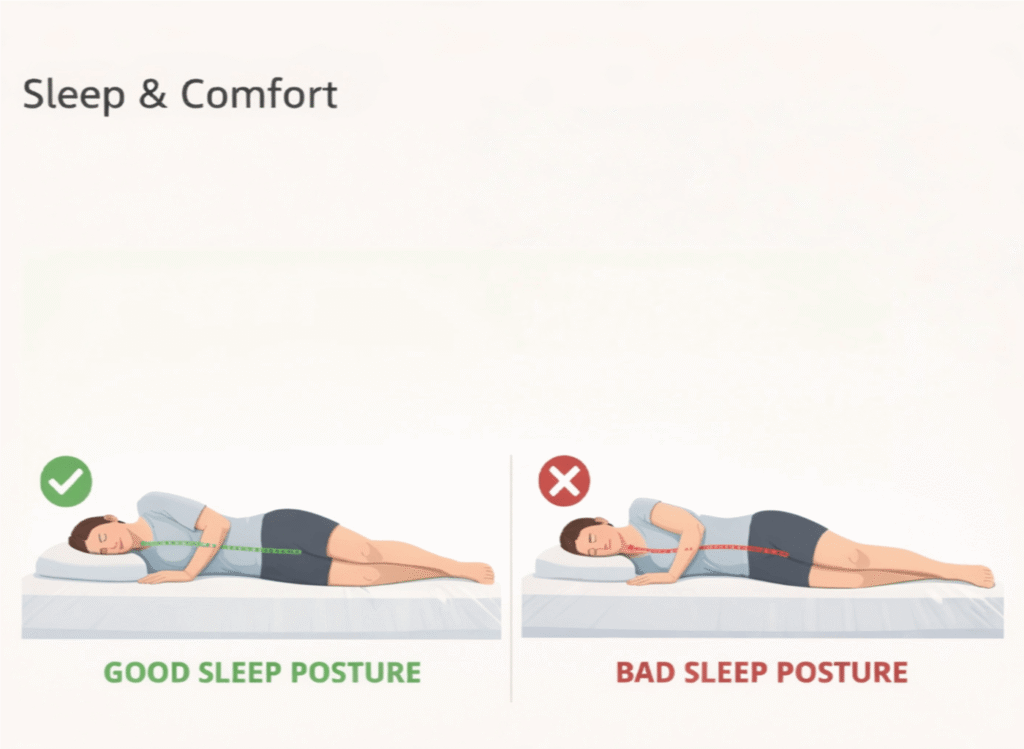
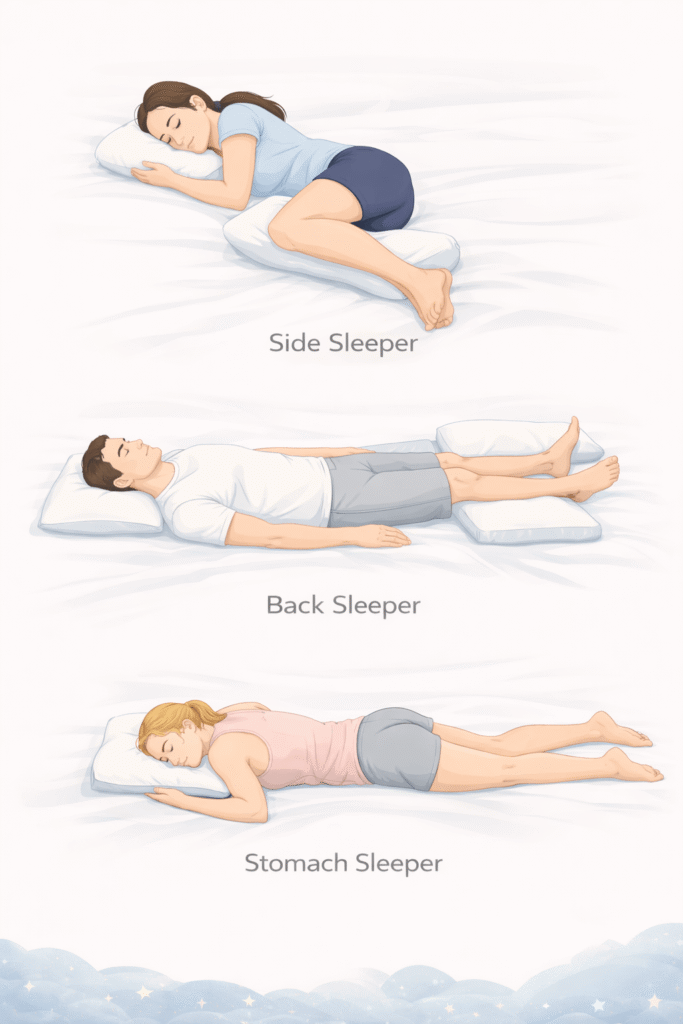
Poor sleep posture is one of the most common causes of neck pain, lower back discomfort, and restless nights. Even minor misalignments can place continuous strain on your spine for hours while you sleep. The diagram below shows the difference between healthy spinal alignment and sleeping positions that can contribute to morning stiffness and long-term discomfort.
5 Tips for Better Sleep Posture
1️⃣ Keep Your Spine in Neutral Alignment – Your head, neck, and spine should form a straight line — not tilted up, down, or twisted. A properly sized pillow should support the natural curve of your neck without pushing your head forward or letting it drop too low. Not sure which sleep position is best? Read our complete Sleep Position Guide.
2️⃣ Choose the Right Pillow Height – Your pillow should fill the space between your head and the mattress — especially if you sleep on your side. The goal is alignment, not softness.
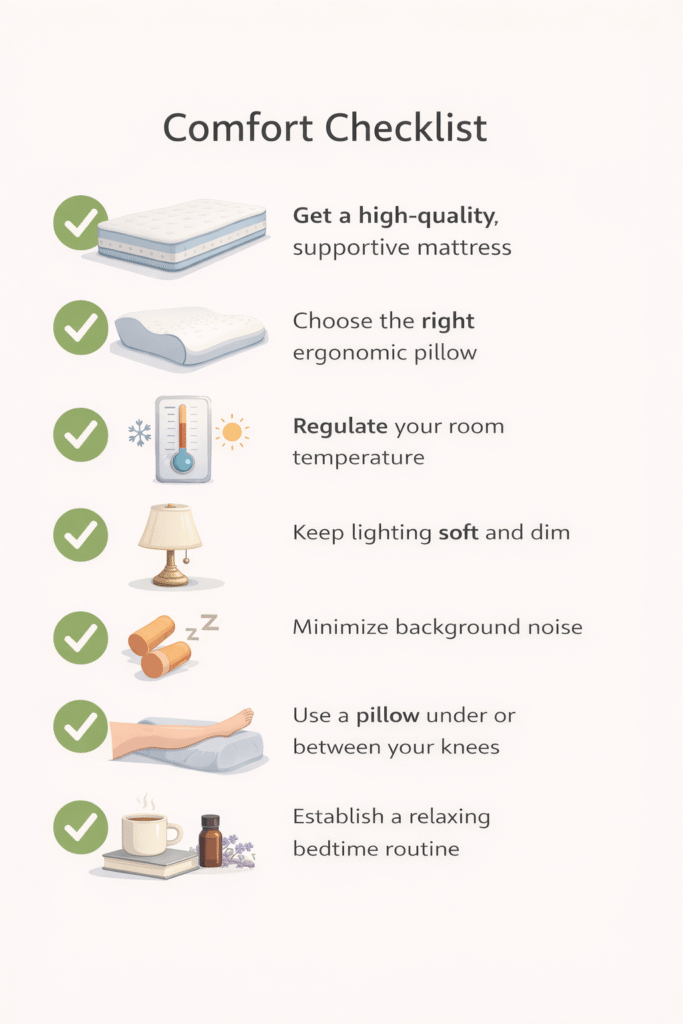
3️⃣ Support Your Hips and Knees – If you sleep on your side, place a pillow between your knees to prevent your top leg from pulling your spine out of alignment.
If you sleep on your back, placing a pillow under your knees can reduce lower back strain. Small adjustments can significantly reduce morning stiffness.
4️⃣ Avoid Stomach Sleeping – Sleeping on your stomach forces your neck into rotation for hours and compresses your lower back. Over time, this can lead to neck pain and lumbar discomfort. If you struggle to change positions, gradually train yourself to turn to your side using supportive pillows.
5️⃣ Upgrade Your Mattress Support – Even perfect pillow positioning can’t fix a mattress that’s too soft or sagging. Your mattress should support your natural spinal curve without excessive sinking.
If you wake up with pain that improves during the day, your mattress may be the issue. See our guide to the best mattresses for back pain.
Better Sleep Optimization
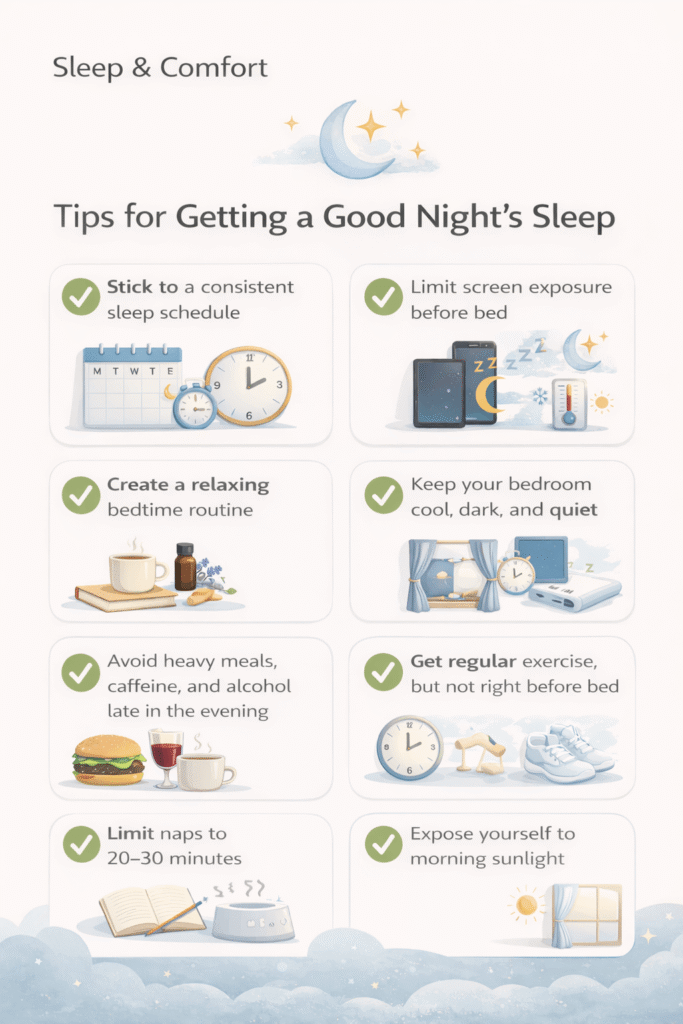
Getting better sleep doesn’t always require expensive gadgets or supplements. Small, consistent lifestyle changes can dramatically improve your sleep quality over time. Here’s how to build a natural, sustainable sleep routine.
1. Stick to a Consistent Sleep Schedule
Your body runs on a circadian rhythm — an internal clock that regulates when you feel awake or sleepy.
- Go to bed and wake up at the same time every day (yes, even weekends).
- Aim for 7–9 hours of sleep per night.
- If you need to adjust your schedule, do it gradually (15–30 minutes per night).
Consistency trains your body to fall asleep faster and wake up more refreshed.
2. Create a Relaxing Wind-Down Routine
Your brain needs clear signals that it’s time to power down and shift into rest mode, which is why calming, repetitive habits before bed can make it easier to relax and fall asleep naturally.
Try:
- Reading (physical book, not a bright screen)
- Gentle stretching or light yoga
- Deep breathing exercises
- Journaling to clear mental clutter
Avoid intense TV shows, stressful conversations, or checking work emails before bed, as these can overstimulate your mind and make it harder to relax and fall asleep. Read our ultimate guide to better sleep naturally
3. Optimize Your Sleep Environment
Your bedroom should support sleep — not compete with it. A cool, dark, quiet, and clutter-free environment helps signal to your body that it’s time to relax, unwind, and transition into deeper, more restorative rest.
Temperature:
Keep the room cool (around 60–67°F / 15–19°C).
Lighting:
Use blackout curtains or a sleep mask to block light.
Noise:
Consider white noise or a fan if outside sounds disrupt you.
Comfort:
Your mattress and pillow matter more than you think. If you struggle with neck tension or stiffness, you may benefit from a supportive cervical pillow designed to maintain proper spinal alignment. See our cervical pillow review
4. Reduce Evening Screen Exposure
Blue light from phones, tablets, and laptops can suppress melatonin production, making it harder for your body to recognize that it’s time to sleep. This can delay sleep onset, make it more difficult to fall asleep, and reduce overall sleep quality if screen use becomes part of your bedtime routine.
- Stop screen use 60 minutes before bed.
- Use blue-light filters if you must work late.
- Keep your phone out of the nightstand to avoid scrolling.
Your brain needs darkness to prepare for deep sleep. If falling asleep is still difficult even after limiting screen time, your sleep setup may be part of the issue. Explore our guide to the best sleep products that actually improve rest.
5. Be Mindful of Food & Drink
What you consume before going to bed can significantly affect your sleep quality, making it important to be mindful of your evening food and drink choices.
Avoid:
- Caffeine 6–8 hours before bed
- Heavy or spicy meals late at night
- Excess alcohol (it disrupts REM sleep)
Helpful options:
- Herbal teas (like chamomile)
- Light protein-based snacks if you’re hungry
6. Get Natural Light During the Day
Morning sunlight helps regulate your circadian rhythm.
- Spend 10–20 minutes outside early in the day.
- Open blinds immediately after waking.
- Move your workouts earlier when possible.
Daytime light can improve nighttime sleep quality.
7. Manage Stress Before Bed
Racing thoughts are one of the biggest sleep disruptors, making it harder to relax, fall asleep, and stay asleep through the night.
Natural stress reducers:
- Meditation (even 5 minutes helps)
- Progressive muscle relaxation
- Gratitude journaling
- Breathwork (4-7-8 method)
Calming your nervous system is key to falling asleep naturally.
8. Stay Physically Active (But Not Too Late)
Regular exercise improves sleep quality and duration. Poor posture during the day can also affect nighttime and cause neck pain, especially for desk workers. Read our guide on office comfort & pain relief.
- Aim for 30 minutes of moderate activity most days.
- Avoid intense workouts within 2–3 hours of bedtime.
- Even walking counts.
Movement builds healthy sleep pressure.
The Bottom Line
Improving sleep naturally isn’t about one perfect solution — it’s about stacking small habits that support your body’s natural rhythms. Start with one or two changes this week. Once they feel automatic, add another. Over time, these small adjustments can transform your sleep — and how you feel every day.
Helpful Resources for Better Sleep
Looking to go deeper? These guides and reviews will help you build the perfect sleep setup and improve your rest naturally:
- Best Sleep Products That Actually Improve Rest – A curated list of sleep essentials that support deeper, more restorative sleep.
- Top 10 Best Pillows for Neck Pain – See whether a contour pillow can reduce neck pain and improve alignment.
- How to Choose the Right Pillow for Neck Pain – A practical guide to finding the best pillow for your sleep position.
- The Ultimate Guide to Better Sleep Naturally – Step-by-step strategies to improve sleep without medication.
- Best Knee Pillows for Side Sleepers – Top-rated knee pillows to improve sleep posture and spine alignment
This guide will continue to be updated with new products and expert-backed tips to help you improve your sleep routine and wake up refreshed every day. So feel free to bookmark it!
Ergonomic Comfort for Daily Life
Better sleep doesn’t start at bedtime — it starts with how you support your body throughout the day. If you spend hours at a desk, on the couch, or working from home, poor posture and lack of ergonomic support can quietly lead to:
- Neck and shoulder tension
- Lower back pain
- Tight hips and hamstrings
- Poor circulation
- Increased fatigue
Over time, these discomforts don’t just affect productivity — they impact how well you sleep at night. Creating an ergonomic environment for both work and relaxation helps your body stay aligned, supported, and tension-free.
Why Ergonomics Matters for Sleep Quality
This is what happens when your spine stays properly aligned during the day:
- Muscles experience less strain
- Inflammation is reduced
- Nerve compression is minimized
- Blood flow improves
- Your body can fully relax at night
If your body is stressed for 8+ hours during the day, it won’t magically “reset” when you lie down.
Comfort is cumulative — the small choices you make all day add up, from how you support your posture at your desk and manage pressure in your neck and back to how you unwind before bed and align your body with the right mattress and pillow for deeper, more restorative sleep.
Key Ergonomic Essentials for Everyday Comfort
1. Supportive Desk Seating
A quality ergonomic chair should:
- Support the natural curve of your spine
- Allow your feet to rest flat on the floor
- Keep knees at a 90-degree angle
- Support your lower back
If your feet don’t comfortably reach the floor, a footrest can significantly improve posture and circulation.
2. Under-Desk Foot Support
An under-desk footrest:
- Reduces pressure on the lower back
- Improves leg alignment
- Encourages subtle movement
- Helps prevent stiffness
It’s a small upgrade that makes a noticeable difference — especially for remote workers.
3. Lumbar & Back Support Cushions
If you’re not ready to invest in a new chair, lumbar cushions are an affordable alternative.
They help:
- Maintain spinal alignment
- Reduce slouching
- Minimize lower back strain
- Improve sitting endurance
These are especially helpful for dining chairs, sofas, or travel. For more ways to improve comfort, see our lumbar support guide.
4. Relaxation Comfort Tools
Ergonomics isn’t just about work.
Consider:
- Reading pillows for bed
- Recliner support cushions
- Foot elevation pillows
- Neck support while watching TV
Proper support during relaxation prevents strain and promotes recovery, which directly impacts nighttime sleep.
How to Set Up an Ergonomic Comfort Zone
Use this quick checklist:
✔ Screen at eye level
✔ Shoulders relaxed, not hunched
✔ Lower back supported
✔ Feet flat or supported
✔ Hips slightly higher than knees
✔ Wrists neutral while typing
Small adjustments create major comfort improvements.
The Connection Between Daytime Comfort & Nighttime Recovery
When your body is properly supported all day:
- You fall asleep faster
- You wake up with less stiffness
- Muscle recovery improves
- Tension headaches decrease
- Sleep quality naturally improves
Sleep and ergonomics work together — not separately. Supporting your body during the day makes restful sleep easier at night.
Explore More Ergonomic Solutions
- Best Footrests for Under-Desk Comfort
- Cervical Pillows for Neck Alignment
- Lumbar Support Cushions Reviewed
- Work From Home Comfort Essentials
Helpful Resources for Ergonomic Office Comfort
- 👉ComfiLife Foot Rest Review – Support your posture throughout the day to reduce tension at night.
- 👉 Ergonomic Office Accessories – Best for Home Workspaces
- 👉 Under-desk Ergonomic Setup Checklist– A complete guide for comfort and productivity
- 👉 Work from Home Comfort Essentials – How to create a comfortable workspace to be more productive
Pain Relief & Body Alignment
Pain isn’t just uncomfortable — it’s disruptive.
Neck stiffness, lower back strain, and hip discomfort don’t just affect your day. They interfere with how deeply you sleep, how quickly you fall asleep, and how restored you feel in the morning.
The good news?
Most chronic tension is caused — or worsened — by poor support.
When your spine, neck, and hips are properly aligned, your body can relax, and when it does, real recovery begins.
Why Support Matters More Than Stretching Alone
Stretching helps. Massage can provide temporary relief. Heat therapy can loosen tight muscles and ease discomfort. But on their own, these solutions often only address the symptoms — not the underlying cause. If your body continues to lack proper support throughout the day and night, tension and pain are likely to return.
But if you return to unsupportive seating, poor mattress alignment, or the wrong pillow, the pain cycle continues.
Better support:
- Keeps the spine in neutral alignment
- Reduces muscle compensation
- Minimizes pressure points
- Improves circulation
- Decreases nighttime tossing and turning
Support isn’t about rigidity — it’s about balance.
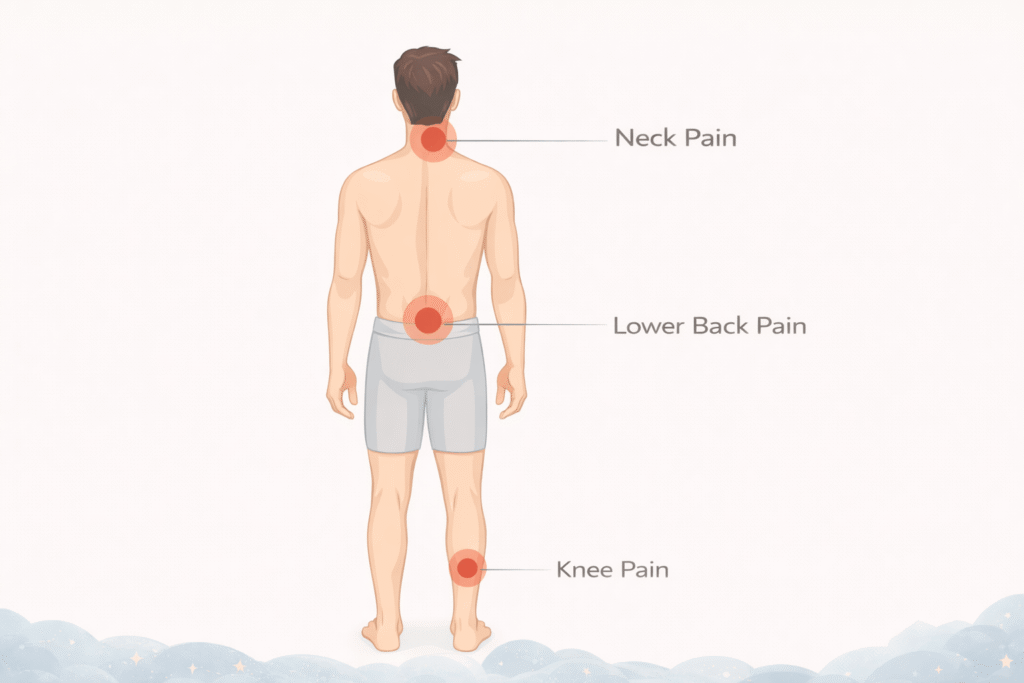
1. Neck Pain: Start With Proper Cervical Alignment
Neck pain is often caused by poor sleep posture, inadequate pillow support, prolonged forward head posture, and sitting positions that place ongoing strain on the cervical spine. Even small alignment issues throughout the day or night can lead to muscle tension, stiffness, and recurring discomfort over time.
- Pillows that are too high or too flat
- Forward head posture (tech neck)
- Unsupported sitting positions
- Side sleeping without shoulder alignment
What Helps:
✔ Contoured cervical pillows
✔ Adjustable loft pillows
✔ Proper monitor height during the day
✔ Lumbar support (neck pain often starts lower in the spine)
When your neck stays aligned with your spine, tension headaches and stiffness often decrease significantly.
2. Lower Back Pain: Focus on Lumbar Support
Your lower back has a natural inward curve (lumbar curve).
When that curve collapses from slouching or poor seating, strain builds quickly.
Improve Support By:
✔ Using a lumbar cushion while sitting
✔ Keeping hips slightly higher than knees
✔ Avoiding overly soft couches
✔ Supporting feet if they don’t reach the floor
A small ergonomic upgrade, such as an under-desk footrest, can dramatically reduce lower back pressure.
3. Hip Pain: Reduce Pressure & Improve Alignment
Hip discomfort often comes from:
- Side sleeping without knee support
- Sitting for long periods
- Uneven weight distribution
- Mattresses that are too firm or too soft
Helpful Adjustments:
✔ Place a pillow between your knees when side sleeping
✔ Use a wedge or elevation pillow
✔ Choose a medium-support mattress
✔ Alternate sitting and standing
Proper hip alignment reduces strain on the lower spine. It can also improve overall comfort throughout the body.
How Daytime Habits Affect Nighttime Pain
Your body doesn’t distinguish between pain caused by daytime strain and discomfort that shows up at night. Tension, poor posture, and inadequate support during the day can carry over into the evening, making it harder for your body to fully relax and recover during sleep.
If muscles stay tight all day:
- You fall asleep more slowly
- You wake up stiff
- You shift positions frequently
- Deep sleep decreases
Reducing strain during work and relaxation makes bedtime recovery easier.
Quick Alignment Self-Check
Ask yourself:
- Are my ears aligned over my shoulders?
- Are my shoulders rounded forward?
- Are my hips level when sitting?
- Do I wake up with stiffness daily?
Small corrections compound into major comfort improvements.
Best Types of Support Products to Consider
- Cervical contour pillows
- Adjustable memory foam pillows
- Lumbar support cushions
- Under-desk footrests
- Knee pillows for side sleepers
- Mattress toppers for pressure relief
The Bottom Line
Pain relief isn’t about chasing symptoms. It’s about supporting your body correctly — consistently
When your neck, back, and hips are aligned:
- Muscle tension decreases
- Inflammation reduces
- Sleep quality improves
- Recovery becomes easier
Better support equals better sleep, which in turn equals better daily comfort.
How to Choose the Right Comfort Products
Not all comfort products are created equal.
The right pillow, cushion, or support accessory should work with your body — not just feel soft for a few minutes in the store. Choosing wisely means understanding your sleep position, posture habits, and specific pain points.
Here’s how to make smarter, more supportive decisions.
1. Start With Your Primary Pain Point
Before buying anything, ask:
- Do I wake up with neck stiffness?
- Does my lower back hurt after sitting?
- Do my hips feel sore when side-sleeping?
- Do my feet dangle while working at my desk?
Your biggest discomfort should guide your purchase.
For example:
- Neck pain → Look for cervical or adjustable loft pillows
- Tailbone pain → Consider a memory foam seat cushion
- Lower back strain → Add lumbar support or a footrest
- Hip pain → Use a knee pillow or pressure-relief topper
Targeting the root issue prevents wasted money and frustration.
2. Understand Support vs. Softness
Soft doesn’t always mean supportive. Real comfort comes from the right balance of cushioning and structure, so your body stays properly aligned instead of sinking into materials that only feel good for a moment.
Many people choose products that feel plush at first touch but lack the structure needed to maintain alignment. True comfort balances:
- Cushioning (pressure relief)
- Structural support (alignment)
- Density (durability)
Memory foam, high-resilience foam, and contoured designs often provide better long-term results than overly soft fill materials.
If a product collapses under weight, it likely won’t provide proper support.
3. Match the Product to Your Sleep Position
Your sleep position determines how your spine should be supported.
Side Sleepers
- Need higher loft pillows
- Benefit from knee pillows
- Require pressure relief at the shoulders and hips
Back Sleepers
- Need a moderate pillow height
- Benefit from lumbar support
- Should avoid overly thick pillows
Stomach Sleepers
- Need very low loft pillows
- Should prioritize spinal neutrality
Choosing the wrong pillow height is one of the most common causes of chronic neck tension.
4. Consider Adjustability
Adjustable products are often the safest investment.
Look for:
- Adjustable pillow fill
- Removable layers in footrests
- Customizable lumbar cushions
- Multi-height support options
Bodies change. Adjustable comfort products adapt with you.
5. Check Materials & Certifications
Quality matters.
Look for:
- CertiPUR-US® certified foam
- Breathable covers
- Cooling gel infusion (if you sleep hot)
- Removable, washable covers
- Durable stitching
Low-quality materials break down quickly and don’t provide proper support.
Investing in higher-quality construction saves money in the long run.
6. Evaluate Your Daily Environment
Comfort doesn’t exist in isolation.
Ask yourself:
- Is my desk height correct?
- Is my mattress too soft or too firm?
- Does my chair support my lumbar curve?
- Do I relax on unsupportive furniture nightly?
Sometimes, improving your setup is more important than buying a new product.
7. Avoid “Trend Buying.”
Social media trends don’t provide spinal alignment.
Instead of buying what’s viral, focus on:
- Ergonomic design
- Body alignment
- Pressure distribution
- Long-term durability
- Verified user feedback
Support should be practical — not trendy.
A Simple Comfort Decision Checklist
Before purchasing, confirm:
✔ It supports neutral spine alignment
✔ It matches your sleep or sitting position
✔ It addresses your primary pain point
✔ It uses durable materials
✔ It fits your body proportions
If it checks those boxes, you’re making a smart choice.
The Bottom Line
The best comfort product isn’t the most expensive — it’s the one that supports your body consistently and correctly.
When you choose products based on alignment, structure, and real ergonomic function, you reduce pain, improve sleep quality, and build lasting daily comfort.
Thoughtful selection leads to better rest — and better rest leads to better days.
Top Comfort Picks for Better Support
If you’re ready to upgrade your sleep or workspace setup, here are some of the most effective support-focused options based on comfort, alignment, and long-term durability.
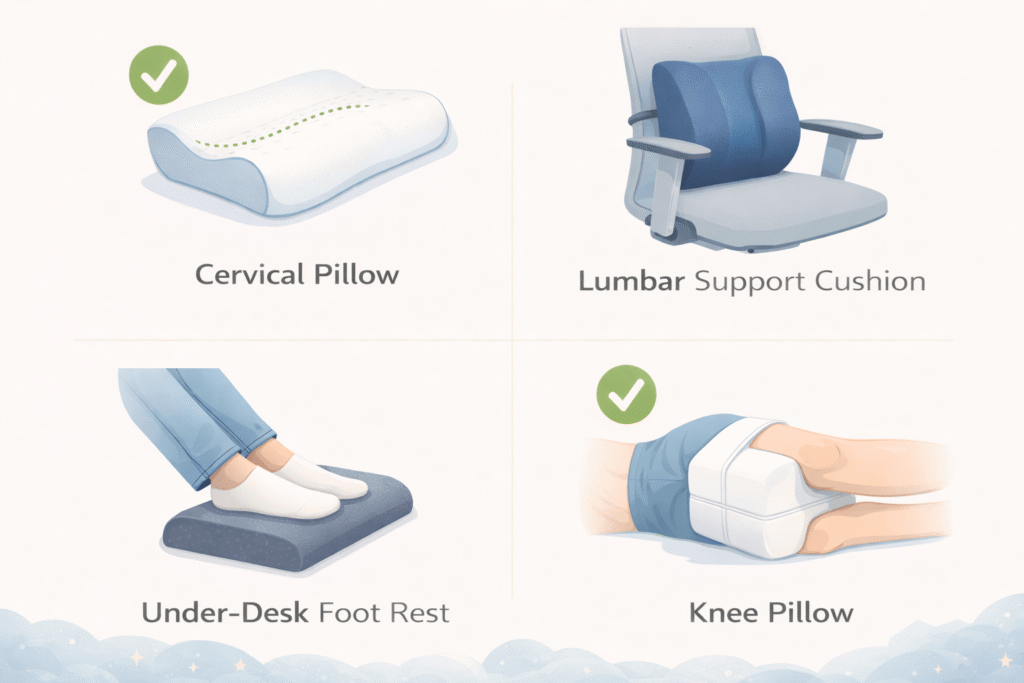
1. Best for Neck Alignment
Cervical Contour Pillow
Ideal for: Side & back sleepers with neck stiffness
Why it works:
- Ergonomic contour design supports the natural cervical curve
- Helps reduce tension headaches
- Promotes spinal neutrality
- Great for tech-neck recovery
👉 See our full cervical pillow review
2. Best for Lower Back Support
Lumbar Support Cushion
Ideal for: Office workers & long sitting sessions
Why it works:
- Maintains lumbar curve
- Reduces slouching
- Portable for home, office, or car
- Improves sitting endurance
3. Best for Desk Comfort
Under-Desk Foot Rest
Ideal for: Work-from-home setups
Why it works:
- Elevate feet for improved circulation
- Reduces lower back strain
- Encourages micro-movement
- Adjustable height options available
👉 See our detailed footrest review
Best for Hip & Side Sleeper Support
Knee Pillow for Side Sleepers
Ideal for: Hip pain & lower back alignment
Why it works:
- Keeps knees aligned
- Reduces hip rotation
- Minimizes pressure on the lower spine
- Compact & travel-friendly
👉 Explore our knee pillow review
Quick Comparison Overview
| Pain Point | Best Product Type | Ideal For |
|---|---|---|
| Neck Pain | Cervical Pillow | Side & back sleepers |
| Lower Back Strain | Lumbar Cushion | Office workers |
| Hip Discomfort | Knee Pillow | Side sleepers |
| Desk Fatigue | Foot Rest | Remote workers |
How to Choose from These Picks
If your pain is mostly:
- Morning stiffness → Start with your pillow.
- Desk-related tension → Upgrade your sitting setup.
- Hip discomfort → Add a knee pillow first.
- General fatigue → Combine ergonomic and sleep upgrades.
Small upgrades compound into major comfort improvements.
Subtle Conversion Tip (Optional Add-On Line)
For a complete setup, many readers combine a cervical pillow with ergonomic desk support for full-day alignment.
Quick Navigation: Explore by Topic
Looking for something specific? Use the guide below to quickly find the right sleep and comfort solutions for your needs. Whether you’re focused on improving your sleep, reducing pain, or upgrading your work-from-home setup, these curated sections make it easy to find what you need.
Better Sleep & Nighttime Comfort
Improve sleep quality, reduce tossing and turning, and wake up refreshed.
- Best Sleep Products That Actually Improve Rest
- Cervical Pillow Review for Neck Pain
- How to Improve Sleep Quality Naturally
- Choosing the Right Pillow for Your Sleep Position
- Cooling Sleep Products for Hot Sleepers
👉 Explore all sleep-focused guides
Ergonomic Comfort for Work & Home
Reduce daytime strain and improve posture while sitting or relaxing.
- ComfiLife Foot Rest Review
- Best Under-Desk Footrests for Back Support
- Lumbar Support Cushions Compared
- Work From Home Comfort Essentials
- How to Set Up an Ergonomic Desk
👉 Browse ergonomic support guides
Neck, Back & Hip Pain Relief
Target alignment issues and pressure points for lasting relief.
- Best Pillows for Neck Pain
- Knee Pillow Benefits for Side Sleepers
- How to Reduce Lower Back Pain While Sitting
- Hip Alignment Tips for Better Sleep
- Support Solutions for Morning Stiffness
👉 See all pain relief articles
Top Product Reviews & Comparisons
Ready to upgrade your setup? Start here.
- In-Depth Sleep Product Reviews
- Best Ergonomic Accessories for Remote Workers
- Comfort Product Comparison Guides
- Top-Rated Support Products
- Budget vs Premium Comfort Picks
Not Sure Where to Start?
If you’re experiencing:
- Morning neck stiffness → Start with sleep alignment guides
- Lower back tension at work → Explore ergonomic support
- Hip discomfort at night → Check knee pillow resources
- General fatigue → Review both sleep and desk comfort solutions
Improving comfort is about small, intentional upgrades — not drastic changes.
Affiliate Disclosure
To support our work in providing honest, comfort-focused reviews, Cozy Living Lab participates in various affiliate marketing programs. This means that if you click on certain links and make a purchase, we may receive a small commission at no extra cost to you. We only recommend products we genuinely believe will improve your everyday comfort and lifestyle. Thank you for supporting our lab!